
Choosing between Botox and dermal fillers is a common decision for anyone wanting a refreshed look without surgery. Each treatment targets different signs of aging—Botox eases movement-driven lines, while fillers restore lost volume. This article breaks down how they work, when Botox may be the better choice, safety considerations, and what to expect so you can make a confident, informed decision.
What Is Botox Compared to Dermal Fillers and How Do They Differ?
Botox (botulinum toxin type A) temporarily relaxes specific muscles to soften dynamic wrinkles caused by facial movement. Dermal fillers are gel-like materials injected beneath the skin to replace volume and smooth static lines. The core difference is intent: Botox limits muscle action; fillers add structure and fullness. Because aging has multiple causes, many people get the best results from a tailored plan that uses each treatment where it fits.
How Botox Works to Reduce Wrinkles
Botox blocks nerve signals to targeted muscles so they don’t contract as strongly, which softens expression lines such as crow’s feet and the vertical “11” between the brows. Results build over several days and generally last three to six months, depending on the area treated and individual metabolism. Learning how Botox works helps set realistic expectations for subtle, natural improvement without surgery.
What Dermal Fillers Are and When They’re Used
Dermal fillers are injectable gels used to restore volume, smooth static creases, and refine facial contours. Common fillers include hyaluronic acid, calcium hydroxylapatite, and poly‑L‑lactic acid—each differs in texture and longevity. Fillers often show immediate change but don’t stop the muscle activity behind dynamic wrinkles, which is why they’re commonly combined with Botox in comprehensive treatments.
Combining approaches—like biostimulators with botulinum toxin and fillers—is increasingly popular for longer‑lasting, more complete results.
Combining Botox & Dermal Fillers for Enhanced Aesthetic Outcomes
Aesthetic medicine has moved toward minimally invasive strategies. Biostimulators such as poly‑L‑lactic acid (PLLA), calcium hydroxylapatite (CaHA), and polycaprolactone (PCL) encourage collagen production, improving texture, elasticity, and long‑term volume. Thoughtful combinations with botulinum toxin, fillers, or energy‑based devices (laser, radiofrequency) can produce more harmonized results.
Key Advantages of Choosing Botox
Botox offers several clear benefits that make it a preferred option for many people seeking subtle facial rejuvenation without surgery. Highlights include:
- Predictable duration: Results typically last up to six months, making scheduling and maintenance straightforward.
- Well‑documented safety: With a long history in clinical use and known, manageable side effects, Botox is safe when administered by qualified providers.
- Therapeutic benefits: Beyond cosmetic improvement, Botox effectively treats conditions such as chronic migraine and excessive sweating, adding functional value for some patients.
These advantages explain why Botox often forms the backbone of a non‑surgical aesthetic plan.
| Advantage | Description | Impact Level |
|---|---|---|
| Longevity | Results commonly last up to six months | High |
| Safety | Minor side effects when properly administered | High |
| Therapeutic Uses | Effective for migraines and excessive sweating | Medium |
How Botox Longevity Compares to Dermal Fillers
Botox typically lasts three to six months, depending on the treatment area and individual factors. Dermal fillers can last from several months up to two years, varying by product and placement. Technique, the specific product chosen, and lifestyle factors also influence duration. Knowing these differences helps with realistic scheduling and maintenance planning.
What Safety Benefits Does Botox Offer?
When administered by experienced clinicians, Botox has a strong safety record. Common short‑term effects include mild bruising or swelling at injection sites. Dermal fillers have their own risk profile—ranging from allergic reactions to, rarely, vascular complications—especially if injected improperly. Regulatory approvals and extensive studies support Botox’s consistent safety when used by trained professionals.
Therapeutic Uses of Botox Beyond Aesthetics
Botox is widely used in medicine: it can reduce the frequency of chronic migraines, treat hyperhidrosis (excessive sweating), and help manage certain muscle spasticity disorders. These therapeutic applications highlight Botox’s versatility and can make it an attractive option for patients seeking both symptom relief and cosmetic benefit.
Can Botox Treat Migraines and Chronic Pain Effectively?
Clinical evidence shows Botox can lower the number and intensity of headaches for many people with chronic migraines. It works by interrupting pain‑related neurotransmitter activity, helping patients have fewer headache days and improved daily function—particularly when other treatments haven’t provided relief. This dual cosmetic and medical value is an important consideration for eligible patients.
What to Expect During Botox Treatment and Aftercare
Botox visits are typically quick and well tolerated. Your provider uses a fine needle to place small doses into targeted muscles; most sessions take less than 30 minutes. Afterward, avoid strenuous exercise and touching the treated areas for a few hours. Results appear gradually over several days as muscle activity diminishes.
How Nurse Practitioners Administer Botox Safely
Licensed nurse practitioners follow thorough safety protocols: they review your medical history, discuss aesthetic goals, and map injection sites and doses accordingly. To increase comfort they may use ice or topical numbing. Careful technique and adherence to guidelines reduce risks and support predictable, satisfying outcomes.
Recommended Aftercare for Best Botox Results
To get the most from your Botox treatment, we suggest:
- Rest: Avoid vigorous exercise for at least 24 hours.
- Hydration: Stay well hydrated to support skin health.
- Watch for changes: Monitor the treated area and contact your provider if you notice anything unusual.
Following these simple steps helps maximize the results and comfort of your treatment.
Why Choose Messina Acupuncture PC for Botox Treatments in East Setauket?
Messina Acupuncture PC is an integrative clinic in East Setauket, NY, known for acupuncture and whole‑person care for pain, musculoskeletal issues, headaches, and stress. We also provide medspa services including Botox treatments. Our focus is on safe, personalized aesthetic care that fits into a broader plan for wellness.
How a Holistic Approach Enhances Botox Benefits
At Messina Acupuncture PC we combine acupuncture with targeted aesthetic treatments like Botox to support circulation, reduce stress, and aid recovery. Addressing physical and emotional factors together often makes visits more comfortable and helps results look balanced and natural.
What Local Clients Say About Their Botox Experience
Local clients report high satisfaction with their Botox treatments at Messina Acupuncture PC—highlighting natural‑looking improvements, increased confidence, and a professional, welcoming team that makes each visit reassuring.
Additional Considerations Before Choosing Botox
Before moving forward with Botox, consider a few important points to ensure safety and good results:
- Medical history review: Share any neurological conditions, allergies, or medications that could affect treatment.
- Realistic expectations: Botox improves dynamic wrinkles but won’t correct skin texture or deep static lines on its own.
- Maintenance: Regular treatments are needed to maintain results, usually every three to six months.
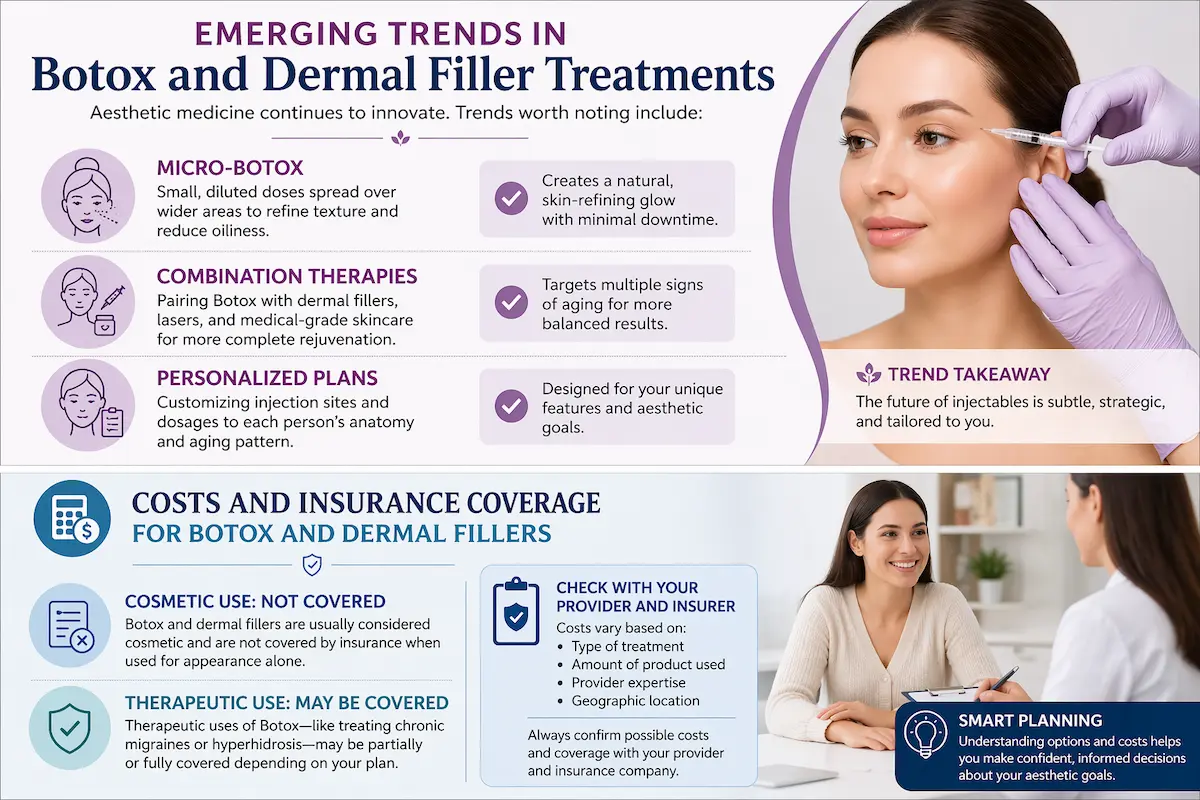
Emerging Trends in Botox and Dermal Filler Treatments
Aesthetic medicine continues to innovate. Trends worth noting include:
- Micro‑Botox: Small, diluted doses spread over wider areas to refine texture and reduce oiliness.
- Combination therapies: Pairing Botox with dermal fillers, lasers, and medical‑grade skincare for more complete rejuvenation.
- Personalized plans: Customizing injection sites and dosages to each person’s anatomy and aging pattern.
Costs and Insurance Coverage for Botox and Dermal Fillers
Botox and dermal fillers are usually considered cosmetic and are not covered by insurance when used for appearance alone. Therapeutic uses of Botox—like treating chronic migraines or hyperhidrosis—may be partially or fully covered depending on your plan. Check with your provider and insurer to understand possible costs and coverage.
Comprehensive Comparison: Botox vs. Dermal Fillers
To help decide which treatment suits you, here’s a side‑by‑side look at Botox and dermal fillers across key factors.
1. Mechanism of Action
Botox: Temporarily blocks nerve signals to muscles, reducing contractions that cause dynamic wrinkles.
Dermal Fillers: Add volume under the skin to fill static wrinkles, restore facial contours, and improve fullness.
2. Primary Treatment Areas
Botox: Often used on the forehead, between the brows (glabellar lines), and around the eyes (crow’s feet).
Dermal Fillers: Commonly used in the cheeks, lips, nasolabial folds, marionette lines, and under‑eye hollows.
3. Onset and Duration of Results
Botox: Effects appear in about 3–7 days and last roughly 3–6 months.
Dermal Fillers: Results are usually immediate and can last from six months up to two years, depending on the product.
4. Treatment Experience
Botox: Quick injections with minimal discomfort; most sessions take under 30 minutes.
Dermal Fillers: May cause some swelling or bruising; session length varies with treatment area.
5. Safety and Side Effects
Botox: Generally safe with minor side effects like bruising or temporary muscle weakness when properly administered.
Dermal Fillers: Risks include bruising, swelling, allergic reactions, and, rarely, vascular complications if injected incorrectly.
6. Cost Considerations
Botox: Typically billed per unit and requires regular maintenance.
Dermal Fillers: Usually charged per syringe; longer‑lasting but may need occasional touch‑ups.
7. Therapeutic Uses
Botox: Approved for medical conditions such as chronic migraines, hyperhidrosis, and some muscle spasticity disorders.
Dermal Fillers: Primarily cosmetic, with no approved therapeutic indications.
8. Ideal Candidates
Botox: Best for people with dynamic wrinkles caused by repeated muscle movement.
Dermal Fillers: Best for those wanting volume restoration or correction of static wrinkles and contour concerns.
Summary Table: Botox vs. Dermal Fillers
| Feature | Botox | Dermal Fillers |
|---|---|---|
| Purpose | Reduce muscle activity to smooth dynamic wrinkles | Restore volume and smooth static lines |
| Onset of Results | 3–7 days | Immediate |
| Duration | 3–6 months | 6 months to 2 years |
| Common Treatment Areas | Forehead, glabella, crow’s feet | Cheeks, lips, nasolabial folds |
| Side Effects | Bruising, swelling, temporary muscle weakness | Bruising, swelling, allergic reactions, rare vascular issues |
| Therapeutic Uses | Yes (migraines, hyperhidrosis, spasticity) | No |
| Cost | Per unit, requires regular maintenance | Per syringe, longer‑lasting |
Frequently Asked Questions:
Is Botox treatment painful?
Most people describe Botox as a quick pinch or sting rather than true pain. Providers use very fine needles and can apply ice or topical numbing to make the process more comfortable.
How soon will I see results after Botox injections?
You’ll usually notice initial improvement within 3–5 days, with full results appearing by about two weeks as the treated muscles relax.
Are there side effects from Botox?
Side effects are usually mild and short‑lived—bruising, swelling, or redness at injection sites. Serious complications are rare when treatments are performed by experienced professionals.
Can Botox be combined with other aesthetic treatments?
Yes. Botox pairs well with dermal fillers, biostimulators, and energy‑based procedures to achieve broader facial rejuvenation when planned carefully.
How long do Botox results last?
Results typically last three to six months, depending on your metabolism, the treatment area, and dose.
Is Botox safe for everyone?
Botox is safe for most adults when administered by trained clinicians, but it’s not recommended for pregnant or breastfeeding women, people with certain neuromuscular disorders, or those allergic to product ingredients. A consultation helps determine if it’s right for you.
Can Botox help with medical conditions?
Yes. Botox is FDA‑approved for several medical uses, including chronic migraines, hyperhidrosis (excessive sweating), certain muscle spasticity disorders, and select bladder conditions.
What should I avoid after receiving Botox?
After treatment, avoid vigorous exercise, rubbing or massaging the treated area, and lying flat for at least four hours to reduce the chance of the product migrating to unintended muscles.